
Before you start
Work on one shelf rather than the whole wardrobe. Sort by current use and measure width, depth and height. Leave room to reach in. Check furniture load limits and instructions for securing it against tipping.
Put everyday clothes within reach
Give frequently worn clothes the easiest shelves to reach. Occasional items can sit farther back, but keep them visible or labelled. Avoid heavy containers on high shelves that are difficult to reach.
Try it before buying
Choose clothes for a typical week and give them the most accessible spaces.
Fold T-shirts into short rows
Upright folded shirts in a drawer let you remove one without disturbing a stack. The row works best when it is neither compressed nor so loose that everything falls over.
Try it before buying
Try a row of five shirts. Open and close the drawer a few times to see whether the layout stays clear.
Use separate compartments for small items
Separate spaces make socks and underwear easier to put away. Size the compartments around the quantities you own. Too many tiny sections can waste useful space.
Try it before buying
Test the arrangement with clean, smooth small boxes before choosing inserts.
Leave room between hanging clothes
Group hanging clothes by type and allow room to take each item out. Read care labels: hanging is not right for every garment. Extra hanging organisers reduce space and add weight to the rail.
Try it before buying
Temporarily remove rarely worn items and see how much room your everyday clothes need.
Keep seasonal clothing separate and findable
Clean, fully dry clothes can wait in a suitable container until their season returns. Add a short label describing the contents. Check care guidance before tightly compressing delicate fabrics.
Try it before buying
Move just one small seasonal group first and note where you have stored it.
Fold T-shirts so each one stays accessible
Try this with suitable everyday T-shirts; it is not a rule for every fabric. Check the care label and adapt the fold width to your drawer. Each shirt should lift out without pulling neighbouring items with it.
Simplified sequence. Adapt the fold width and number of folds to the shirt and compartment.
- 1 — Lay the shirt flat. Fold both sides and sleeves inwards to make a strip slightly narrower than its intended compartment.
- 2 — Fold the strip upwards from the hem into suitable sections. Check its finished height before folding every shirt: the drawer must close freely above it.
- 3 — Start with five shirts standing alongside each other. If the row falls over, narrow its compartment with a suitable divider rather than packing in more shirts.
- Take out the middle shirt and put it back. If the row collapses or jams, adjust the compartment width or try a short flat stack.
Deep shelves and a single hanging rail
Deep shelves often end up with two stacks, one behind the other. Instead of lifting the front stack every day, try a labelled seasonal box at the back and current clothes at the front. If you need both rows daily, test a removable container that uses the shelf depth. It must pull out without tipping or compressing clothes.
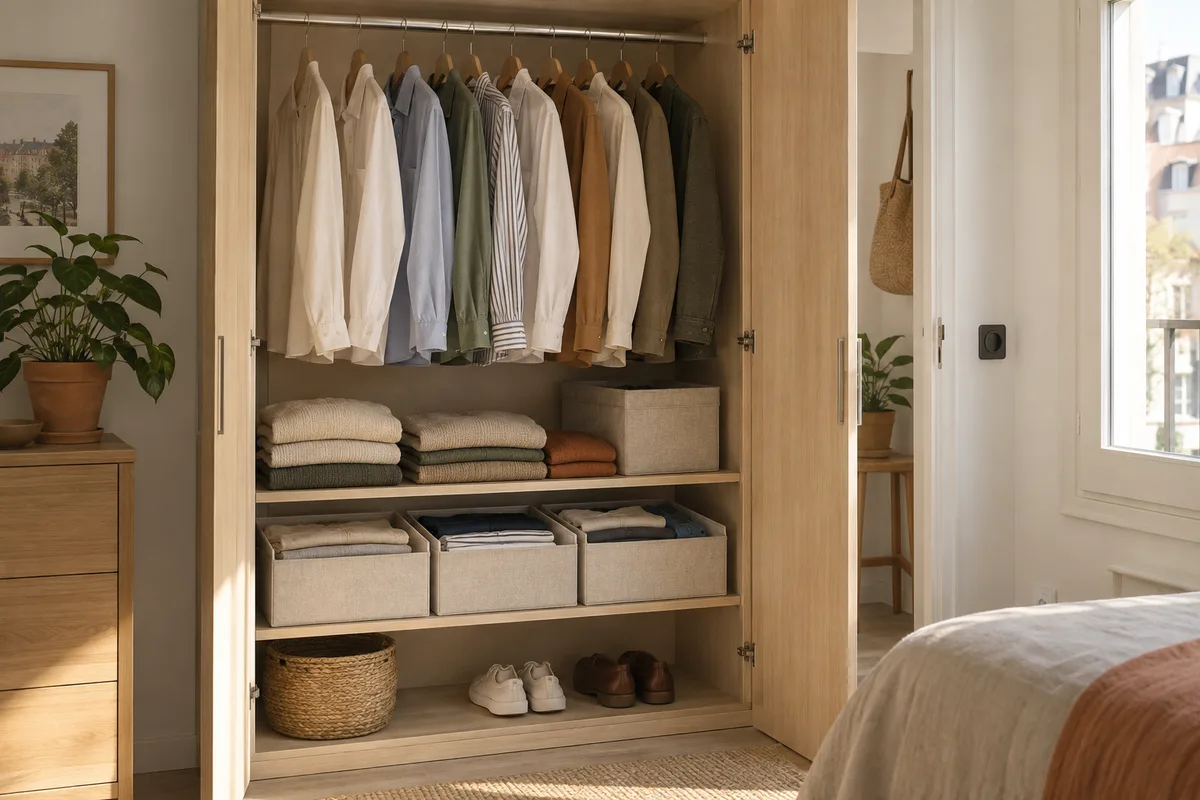
Example for a wardrobe with one rail and three shelves: hang suitable current clothing on the rail with room to reach between items. Give the easiest shelf to everyday clothes, with a small underwear compartment beside or below it. Use a less accessible shelf for lightweight seasonal items. Keep heavy things low and easy to reach. This is a possible layout, not a suggested clothing quantity or furniture load rating.
What if the mess returns after a week?
Review a normal week, including laundry day. Keep a layout only if both taking things out and putting them back work for you. In a shared wardrobe, clear ownership of compartments can matter more than matching folds.
| What you notice | What to try next |
|---|---|
| Clean laundry stays outside the wardrobe. | Check whether you can put it away without lifting other stacks. Simplify one movement. |
| Upright rows fall over. | Narrow the compartment with a loose divider or use a short stack. |
| Clothes at the back get forgotten. | Keep less-used items there and label them; leave daily clothes at the front. |
| Every shelf is full despite a sensible layout. | Review quantity and seasonal use. Another box does not enlarge the wardrobe. |
Your checklist
Check these points before choosing a solution. Tick marks apply only to this visit.
Manufacturer guidance
These resources supplement the instructions for your particular furniture or accessory; they are not product recommendations.