
Before you start
Clear one surface and separate everyday items from spare supplies. Measure the inside of drawers, including their height. Leave room for pipes, hinges and drawer movement. Anything left on the counter should be easy to lift when cleaning.
Make a small daily-use zone
Group only the things you use in the morning and evening. A shallow, washable tray keeps them together and lifts out of the way for cleaning. Keep the edge of the basin as clear as possible.
Try it before buying
Try an existing tray for a typical week. Include weekly routines and give less-used items another accessible place.
Divide drawers by routine
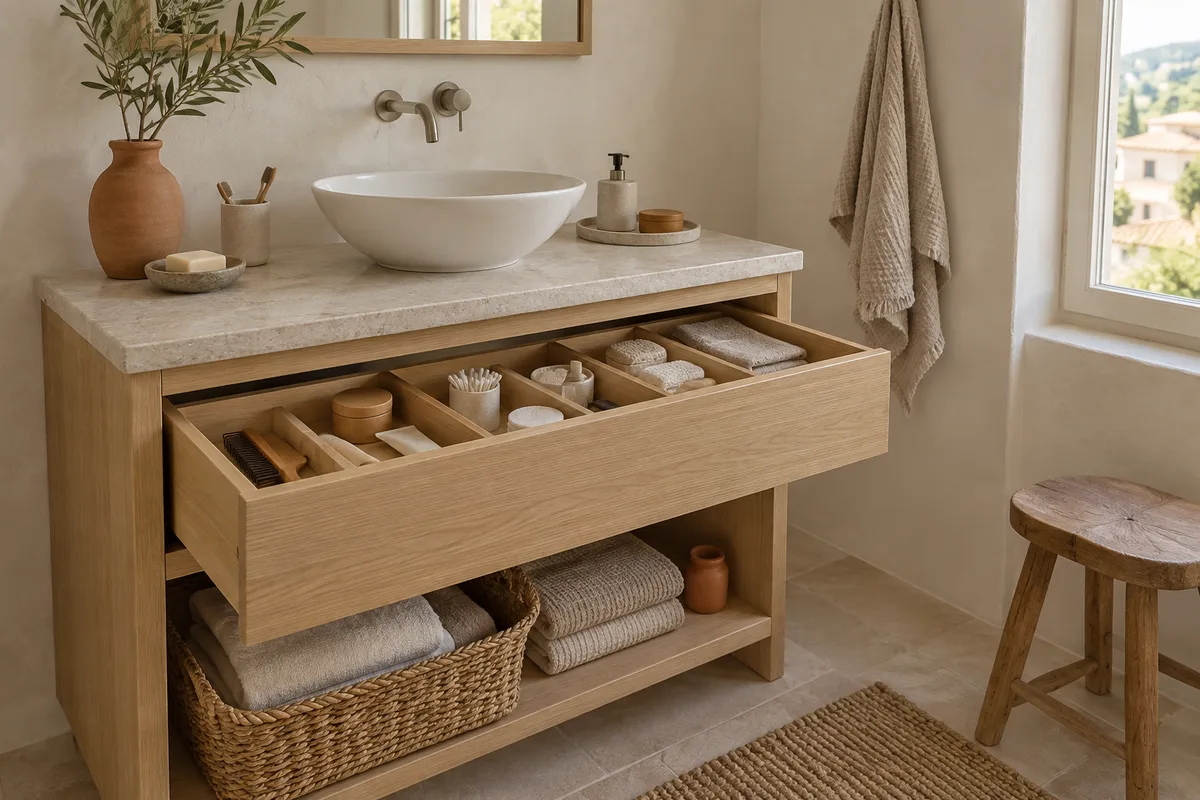
Separate dental care, hair accessories and skincare into small compartments. Individual removable inserts are easier to arrange than one large grid. Check tall tubes and make sure the drawer closes without resistance.
Try it before buying
Lay out the groups without inserts first, then sketch the space each group needs on paper.
Keep spare supplies elsewhere
An unopened spare does not have to sit beside the tube you are using. A separate container makes stock easier to see. Follow the storage directions on packaging; a damp bathroom is not suitable for everything.
Try it before buying
Gather spare supplies in a suitable dry place and list what you already have before shopping.
Separate towels by use
Keep a small set of clean, dry towels within reach. Extras can live outside the bathroom. Damp textiles need a place to dry rather than a closed basket with clean supplies.
Try it before buying
Observe what you need between two washes and keep a suitable set nearby. Adapt it to the people and their routine.
Protect one clear surface
Not every gap needs an organiser. A clear area beside the basin makes everyday routines and wiping down easier. If a container gets in the way or collects water, another location may work better.
Try it before buying
Keep one shelf empty for a week. Find a permanent place for anything that still lands there.
Which layout fits your bathroom?
| Starting point | First trial | What to check |
|---|---|---|
| Vanity with a drawer | Group everyday products in a few removable compartments. | Measure internal height and the waste-pipe cut-out; stand tall containers in place as a trial. |
| Cupboard with doors | Keep daily items at the front and labelled reserves farther back or higher up. | Containers must clear the hinges and lift out individually. |
| Basin without a cupboard | Use an existing shelf for the daily routine and keep reserves in a suitable dry place outside the bathroom. | Do not block walkways or plumbing access with shelving. Clear floor space can be more useful than another storage unit. |
Restocking, drying and cleaning
Separate three states: in use, clean reserves and damp items. A dry reserve basket is not a holding area for used towels. Plan drying space before finding room for extra towels.
The number of towels to keep nearby depends on the people using them, their routine and the laundry interval. Observe what you need between washes rather than buying a universal quantity. Store textiles only when completely dry.
List the contents of your reserve box and check it before shopping. Follow each product's storage instructions; some supplies may need a place outside the humid bathroom.
If the layout fails, identify the specific obstacle: a compartment that is too small, an awkward lid or a shelf too far away. Change that one thing first. A useful test is whether you can easily lift the containers to wipe the surface and put them back afterwards.
Your checklist
Check these points before choosing a solution. Tick marks apply only to this visit.