
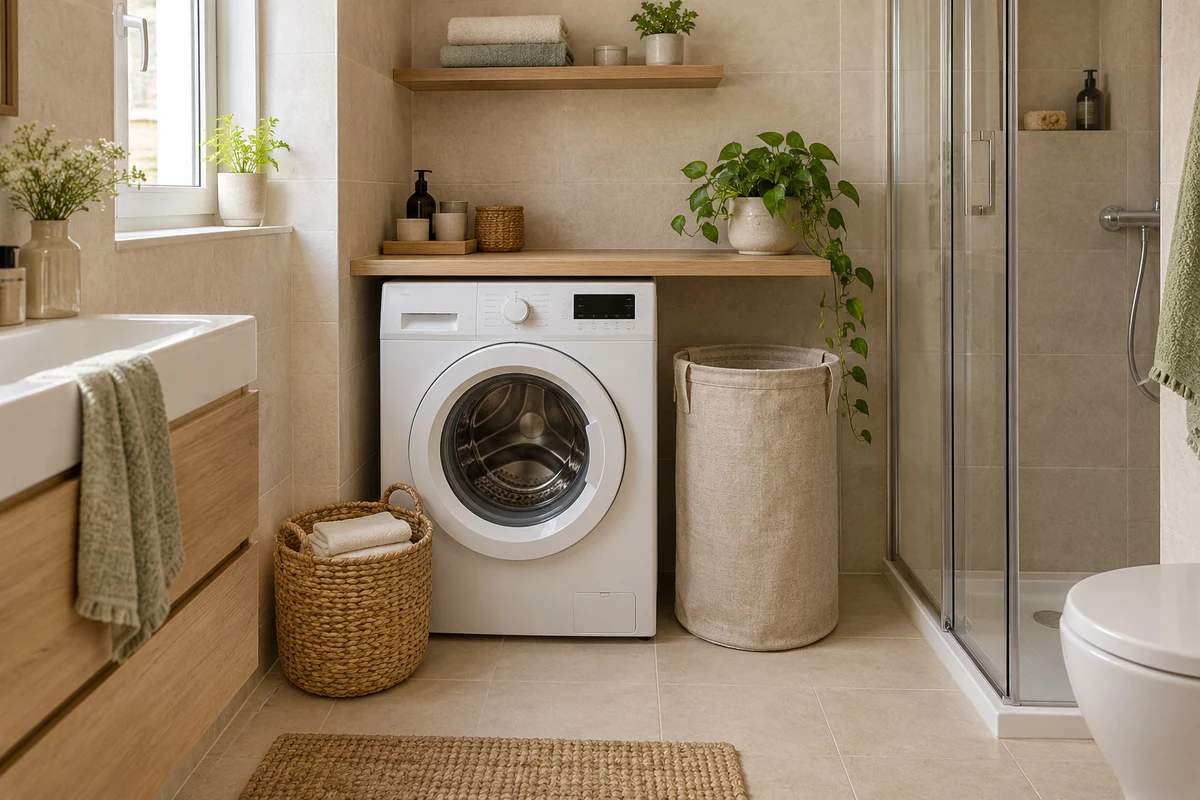
01 / Measure first
The gap between the machine and the wall is only the start.
Measure the narrowest point, including skirting boards, hoses and valves. Check depth and height below any shelf. Open the machine and cabinet doors, then work out how to remove a full basket. Keep ventilation and service access clear and follow the appliance instructions for required clearances.
02 / The narrow gap
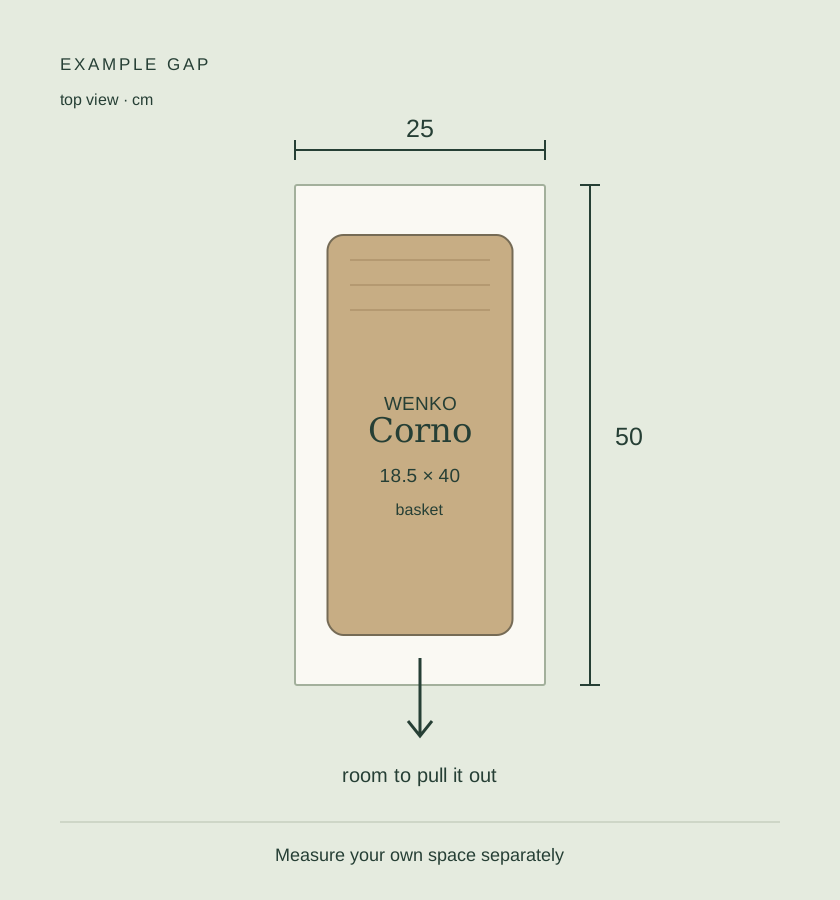
A narrow gap: collect laundry upwards.
A large three-section sorter can make a small gap less useful. A slim wheeled basket uses its depth instead. It only works if you can pull it out freely — lifting a full basket over the washing machine every day is not a convenient plan.
Example: a 25 × 50 cm space and an 18.5 × 40 cm basket leave 6.5 cm in total across the width and 10 cm in total along the depth. These are differences between dimensions, not recommended installation clearances. Allow separately for obstacles and movement.
03 / Sort before washing
Two bags or three compartments? Match your washing routine.
For a week, notice which groups you actually wash separately. Label them to suit your routine, such as lights, darks and delicates; care labels and fabric still determine how you wash them. Do not create a third group just because a basket has room for one. Removable bags may help if the machine is in another room.
You do not need both sorters. The models below are alternatives. Litres describe basket volume, not kilograms of dry laundry or the washing machine drum capacity.
04 / Dry without clutter
A few damp items are a different job from a full load.
Small drying jobs do not always need a large freestanding rack. A wall dryer saves floor space but needs a suitable wall and installation. A hanging dryer can be an alternative where it can be attached securely. Check the open depth, door paths, load limits and instructions for the supporting surface or radiator.
Do not cover ventilation openings or electrical equipment. Do not assume every radiator can carry a dryer. Space damp items apart and ventilate the room; let wet towels dry before putting them into a closed basket.
05 / A small helper
Give your pegs a home too.
If pegs regularly travel between the bathroom and balcony, a hanging bag can make that trip easier. If you only dry clothes on hangers, skip this purchase. A useful accessory removes a particular inconvenience rather than filling another shelf.
06 / Which option fits?
One problem. One considered purchase.
| Your situation | Option to check | What could rule it out |
|---|---|---|
| Gap beside the machine | Corno: 18.5 × 40 × 60 cm | Hoses, skirting, no room to pull it out |
| Carrying two laundry groups | Tota: 56 × 40 × 71 cm | No space above the lid or bags |
| Permanent space for three groups | Trio: 63 × 38 × 57 cm | Insufficient width or excess capacity |
| Drying a few extra items | Telegant 36 or hanging Alu | Unsuitable support or collision when opened |
Before buying: five checks
Two questions before an unsuitable purchase
Is a bigger basket always more convenient?
No. It may block the walkway and be harder to carry. Choose around washing frequency and available space, rather than the largest number of litres.
Can a 3.6 m dryer replace a full-size rack?
Not necessarily. Total rail length does not tell you whether a large sheet or full load will hang comfortably. Plan small models for limited amounts and check spacing and load limits in the instructions.
How we selected the examples
Six specific variants from OTTO DE feed 54165 supplied through Awin. Specifications and seller were checked in OTTO listings on 15 October 2026. The original product photos match the image identifiers in the feed and have not been retouched. The gap diagram is our own planning example. Editorial selection without a hands-on test or a best-product ranking. We do not show prices or promise availability: check the current variant, price, delivery and seller in the listing. Links lead to the German OTTO shop; check its supported delivery area.